



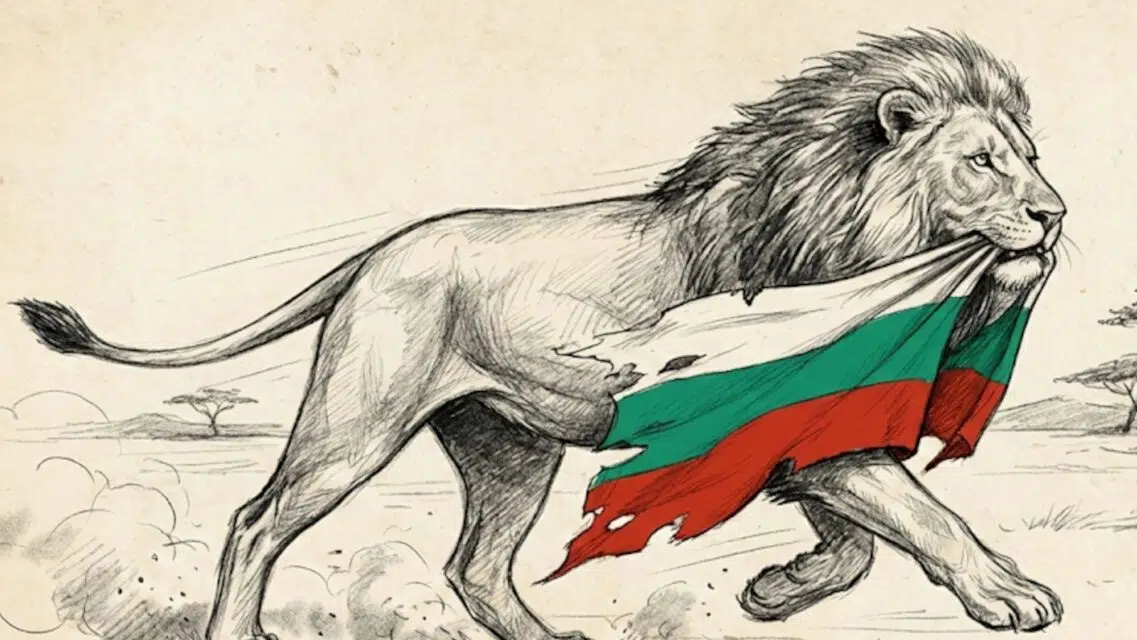
February 1997. A young Bulgarian university graduate woke up to discover his monthly salary—earned, deposited, saved—was now worthless. Overnight, literally overnight, the hyperinflation had accelerated to 242% per month. The lev, Bulgaria's currency, had fallen from 70 to the dollar in autumn 1996 to over 3,000 by the new year. His life savings could barely buy bread.
The banks—nine of them—had collapsed the previous September. Depositors who rushed to withdraw their money found the doors locked, their savings evaporated. Grocery stores rationed flour. Gas stations ran dry. In January, as monthly inflation hit levels not seen in Europe since Weimar Germany, protesters stormed the parliament building in Sofia. The government fell. The nation teetered on the edge of complete disintegration.
This was Bulgaria's Year Zero. Not 1989 when communism fell, but 1997, when the country faced a choice between chaos and discipline so severe it would require giving up the most fundamental tool nations use to manage their economies: the ability to print money.
Bulgaria chose discipline. And that choice, sustained every single day for twenty-eight years, is why Bulgaria is about to do something almost no one expected: enter the eurozone not as its weakest member, but as its most genuinely prepared.
On July 1, 1997, Ivan Kostov's newly elected government did something radical. They implemented a currency board—not as a temporary emergency measure, but as the foundation of a new economic reality. The lev was pegged to the Deutsche Mark at a fixed rate of 1,000 leva to 1 mark. Later, when Germany adopted the euro, the peg transferred: 1.95583 leva to 1 euro.
But this wasn't just a fixed exchange rate. A currency board is economic self-amputation. Every lev in circulation had to be backed by reserves. The Bulgarian National Bank could no longer print money to bail out troubled banks. It could no longer refinance commercial banks without strict collateral requirements. The government could no longer finance budget deficits by creating currency. Bulgaria gave up the escape hatches every other nation kept for emergencies.
Most economists expected Bulgaria to reverse this arrangement once stability returned—maybe in five years, maybe ten. That's what currency boards were for: emergency medicine you take until the patient stabilizes, then gradually you restore normal monetary policy.
Bulgaria never reversed it. Twenty-eight years later, the currency board remains. Bulgaria has lived under eurozone monetary conditions since 1997—longer than the eurozone itself has existed.
Think about that. Greece entered the euro in 2001, after decades of monetary independence, after years of being able to devalue when convenient, inflate when politically expedient. Bulgaria locked itself into eurozone discipline in 1997, before the euro even existed as physical currency, and maintained that discipline through the 2008 financial crisis, through the eurozone debt crisis, through the pandemic.
This is the fact almost no one grasps: Bulgaria isn't joining the eurozone. Bulgaria has been in the eurozone in everything but name for twenty-eight years. January 1, 2026 isn't entry—it's recognition.
As of early 2025, Bulgaria's government debt stands at 23% of GDP. The lowest in the European Union.
Estonia, celebrated for fiscal discipline, comes next at 24%. Denmark, paradigm of Nordic responsibility, sits at 30%. And then the eurozone's actual members: Greece at 153%, Italy at 138%, France at 114%, Spain at 104%, Belgium at 107%.
These aren't snapshots. They're the accumulated arithmetic of decisions made over decades. Between 1998 and 2008, while Spain inflated real estate bubbles that would require €100 billion in bank bailouts, while Ireland turned itself into a property speculation casino, while Greece borrowed recklessly on credit spreads it didn't deserve, Bulgaria ran budget surpluses.
Year after year. Consistently. Without fanfare. Public debt fell from 70% of GDP in 1996 to 13.7% by 2008—one of the lowest ratios in the developed world.
When the 2008 financial crisis hit, Greece needed €289 billion in bailouts. Ireland needed €67.5 billion. Spain needed €100 billion. Bulgaria? Nothing. No bailouts. No sovereign debt crisis. No IMF rescue. The economy contracted, unemployment rose, young people emigrated—but the financial system never collapsed.
The difference wasn't luck. It was structure. Bulgaria's discipline wasn't performed for inspectors or proclaimed in speeches. It was encoded in the architecture of the monetary system itself. You cannot fake discipline when you literally cannot print money to hide your mistakes.
And here's what makes this extraordinary: Bulgaria did this while being the poorest member of the European Union. With GDP per capita at 64% of the EU average. While suffering brain drain as educated young people fled to wealthier countries. While fighting endemic corruption. While managing demographic decline that saw population fall from 9 million in 1989 to under 7 million today.
Bulgaria maintained eurozone-level fiscal discipline for twenty-eight years under conditions that would have broken wealthier nations. And almost nobody noticed.
Look at GDP per capita and Bulgaria appears poor—the EU's poorest member. Look at trajectory and something else emerges.
Since 2000, Bulgaria's economy grew 538%—from $13.15 billion to $107 billion by 2024. Since the 1997 currency board, the economy expanded more than sevenfold. Poland, Eastern Europe's celebrated success story, grew fivefold over the same period. Bulgaria grew faster.
In July 2023, the World Bank reclassified Bulgaria as a high-income economy. This wasn't political charity. It reflected sustained transformation—from post-communist collapse to industrialized, service-oriented, technology-exporting economy.
And inside that growth sits something almost no one sees: Bulgaria's software sector.
The industry contributes 4.5% to GDP, growing 11-12% annually—roughly five times faster than overall GDP growth. The Bulgarian ICT market expanded 300% over seven years, reaching €2.5 billion. Sofia became the second fastest-growing tech hub in Europe.
How does a nation supposedly hemorrhaging talent simultaneously build one of the continent's most dynamic technology sectors? The answer lies sixty years in the past. During communism, Bulgaria invested heavily in electronics and software for strategic reasons—the Soviet bloc needed computing capacity. When the system collapsed, the technical universities remained. The engineering culture persisted. And crucially, it was egalitarian. Bulgarian women now comprise 37% of STEM graduates and 29% of ICT positions—the highest percentage in Europe. This isn't recent achievement but institutional momentum from decisions made before most current engineers were born.
Today, approximately 10,000 ICT companies operate in Bulgaria, with 70% focused on exports. Software industry revenues reached $5.25 billion in 2024, up 12.4% year-over-year. SAP, Microsoft, Oracle, VMware, IBM, Cisco—global tech giants operate major development centers in Bulgaria. Not call centers. Core software development requiring genuine technical sophistication.
Bulgarian developers score 76% on technology proficiency assessments, ranking among Europe's top twenty. Seventy-one percent use English as primary working language. Sixteen percent speak German fluently. Ten percent speak French. This is multilingual capability at scale, inside the European Union, with one-hour time difference from Frankfurt and Paris, at costs 60% below American equivalents and 30% below Western European.
Startup funding increased from $51 million in 2022 to $82 million in 2023. Over 800 startups now operate across the country. This is structural transformation in real time—building export capacity that compounds rather than depletes, resilient to shocks because software flows digitally, instantly, independent of physical supply chains vulnerable to disruption.
There is an indicator that never makes headlines: household debt as percentage of GDP. In Bulgaria, it's 26%. Eurozone average: over 50%. Denmark: over 100%. Netherlands: nearly 200%.
When recession strikes, Bulgarian households don't face the cascading debt crises that turn ordinary downturns into catastrophes. They endure shocks without the amplifying effects that destroyed entire economies in 2008.
There's another invisible form of resilience built into Bulgarian society: homeownership rates among the highest in Europe. Most Bulgarians, especially older generations, own homes outright. Zero mortgage. Zero rent. When unemployment rises, when pensions prove inadequate, when wages fall, Bulgarians don't face eviction. This is social stability invisible to income statistics but crucial when storms hit.
The 2008 crisis tested this. So did the eurozone debt crisis. So did the pandemic. Each time, analysts predicted Bulgarian collapse. Each time, Bulgaria absorbed the shock—not gracefully, not without emigration and hardship, but without systemic failure.
Bank capitalization remains among the EU's highest. The financial system has never required bailouts. Through multiple global crises, through regional shocks, through commodity price swings and trade disruptions, the structure held because the structure was real, not leveraged.
On January 1, 2026, Bulgaria adopts the euro. Newspapers will frame this as a poor country finally catching up. They'll miss the paradox entirely.
Bulgaria's eurozone entry changes almost nothing about actual monetary operations. The lev has been pegged to the euro at a fixed rate since 1999. Bulgaria already cannot devalue, cannot inflate away debt, cannot use monetary policy for stimulus. What changes is participation, not discipline.
As a full eurozone member, Bulgaria gains European Central Bank voting rights—equal voice with Germany and France in monetary policy decisions. It moves from rule-taker to rule-maker, from periphery to core, from conditional to permanent Europe.
The symbolic shift is profound. Companies that avoided Bulgaria due to residual currency risk now have no excuse. Foreign direct investment that was cautious becomes confident. Sovereign spreads that reflected perceived fragility narrow. Credit ratings improve—already upgraded by multiple agencies in 2024 as eurozone entry approached.
But the real revelation is what Bulgaria's entry forces Europe to recognize: the entire narrative about eurozone readiness was backwards.
In 2001, Greece entered the eurozone. Analysts celebrated: convergence was working, monetary union was succeeding, Europe was integrating. Greece met the convergence criteria—deficit below 3%, debt heading toward 60%, inflation contained.
Except Greece had cooked its books. The statistics were fabricated. Goldman Sachs had helped structure currency swaps that temporarily hid the true debt levels. Within a decade, the deception became catastrophe. Greek debt exceeded 180% of GDP. Youth unemployment hit 58%. The economy contracted 25%. Pensioners lost their life savings. The eurozone nearly collapsed.
Bulgaria enters with opposite fundamentals. Debt at 23%, authenticated by twenty-eight years of currency board discipline that makes creative accounting structurally impossible. Household debt at 26%, compared to Greece's explosion past 130% before crisis. No current account deficit running over 10% like Greece's. No economy addicted to borrowed money masquerading as prosperity.
Greece believed eurozone membership would solve problems—cheap credit would fuel growth, German interest rates would finance Greek living standards, convergence would happen automatically. Bulgaria harbors no such illusions.
Bulgaria knows monetary union provides no shortcuts. That genuine productivity growth requires genuine capability building. That fiscal discipline matters not for meeting criteria but for surviving crises nobody sees coming.
The difference isn't moral. It's structural. Greece had easy options for decades—borrow, inflate, devalue—and took them all until the options ran out. Bulgaria never had those options. The currency board removed them in 1997. Twenty-eight years of discipline wasn't virtue. It was necessity transformed into strength.
Here's the uncomfortable reality European policymakers don't discuss: most current eurozone members wouldn't survive Bulgaria's test.
Could France maintain its debt below 25% for twenty-eight years with no ability to monetize deficits? Could Italy survive three decades without devaluation to restore competitiveness? Could Spain endure recession after recession without central bank liquidity injections?
The answer is obvious. They couldn't. They haven't. They're not even trying.
Bulgaria passed the test nobody was watching. Twenty-eight years of discipline under conditions—poverty, corruption, brain drain, demographic collapse—that would excuse failure. And not only did Bulgaria not fail, it built capabilities that compound: a technology sector growing five times faster than GDP, export sophistication that survives global shocks, fiscal capacity that turns crises into manageable recessions rather than existential catastrophes.
This is what genuine preparation looks like. Not meeting criteria imposed from outside. Not performing discipline for inspectors. Not proclaiming readiness in speeches. But internalizing constraints so deeply that discipline becomes reflex, building structures so sound that they don't collapse when tested.
On January 1, 2026, when Bulgaria formally adopts the euro, the moment will pass with minimal fanfare. Another small country joining. Another bureaucratic milestone. Most of Europe won't notice.
But something consequential is happening. The poorest member of the European Union, the nation everyone underestimated, the economy analysts dismissed as corrupt and backward, is entering the eurozone having already done what the wealthiest members only pretended to do.
Bulgaria proved you can be poor and disciplined. That convergence is possible through genuine transformation, not borrowed prosperity. That preparation matters more than wealth, that structure matters more than GDP per capita, that twenty-eight years of sustained discipline creates strength invisible to conventional metrics but visible the moment crisis strikes.
The world spent three decades looking at Bulgaria and seeing only poverty. It missed fiscal discipline that put Germany to shame. It missed technology capabilities that attracted the world's best companies. It missed resilience built not through rhetoric but through twenty-eight years of living under constraints that would have broken wealthier nations.
Bulgaria's entry into the eurozone doesn't validate Bulgarian preparation. Bulgarian preparation exposes how unprepared most eurozone members actually are.
The test isn't joining. The test is what happens when the next crisis comes—and it will come, because crises always come. When that moment arrives, Europe will discover which members practiced discipline and which merely performed it. Which built real capabilities and which borrowed temporary prosperity. Which understood that strength comes from sustained preparation, not convenient narrative.
Bulgaria will endure. Not because it's wealthy—it isn't. Not because it's perfect—far from it. But because it has already survived everything the eurozone will throw at it. Twenty-eight years of currency board discipline wasn't preparation for easy times. It was preparation for the crisis nobody sees coming yet.
This is Bulgaria's invisible advantage: genuine preparation, built through genuine sacrifice, sustained so long it stopped being sacrifice and became structure. The world sees poverty. It misses the twenty-eight year marathon that built something more durable than wealth.
On January 1, 2026, Bulgaria crosses a finish line it reached decades ago. The world is about to learn the lesson Bulgaria mastered in 1997: discipline isn't what you perform when inspectors visit. It's what you build when nobody's watching. And it's the only currency that never devalues.