


The Da Vinci Cup sits on the table like an accusation, its silver rim catching light in a way that feels both hopeful and deeply ironic. It was created to symbolize the apex of human leadership - an object meant for a figure who could guide a technologically saturated civilization toward wisdom rather than spectacle. Yet the cup remains empty. Not because ambition is scarce, or because innovation has slowed, but because the kind of person capable of lifting it - the kind of leader who could unite beauty, intelligence, empathy, and purpose - simply hasn't appeared. Or perhaps couldn't appear under the conditions we've created.
What we do have are titans. Characters. Prodigies of engineering, scale, algorithm, influence, and sheer audacity. And still, something essential is missing. Not talent. Not intelligence. Something softer and more dangerous: an integrated sense of humanity. The Renaissance ideal, in which creativity and morality grow together, has dissolved into a world that prizes velocity over vision, impact over insight, and dominance over understanding. The result is a vacuum masquerading as a pantheon.
Titans
Take the mythic founder whose aesthetic became a religion. The world remembers him as a prophet of clarity and simplicity, a designer who understood that objects could shape identity. His devices were not inventions but statements, each one asserting that technology need not be mechanical or cold. He believed tools were extensions of human imagination. But it has been years since that vision animated anything. His successors maintain the cathedral but not the faith; the product continues, the ritual repeats, but the animating soul has gone quiet. Leadership without the inward furnace becomes theater.
Then there is the philanthropist of the spreadsheet age, forever attempting to rearrange humanity into legible rows. His intentions are undeniably noble; the world's tragedies weigh on him like overdue assignments. He applies logic where history applies chaos and mathematics where anthropology applies myth. But societies do not respond neatly to optimization. Empires collapsed not because someone miscalculated grain output but because people fell in love, betrayed one another, misinterpreted omens, or simply got tired of being told what was rational. The philanthropist misreads the oldest truth: human beings are agents of narrative, not efficiency.
Another figure stands at the edge of the atmosphere, peering upward. He believes Earth is a temporary inconvenience, a dusty prelude to a more dramatic second act on a planet stained red with ancient loneliness. His logic is seductive: if humanity is broken, why fix it when you can relocate it? But escape has always been easier than repair. And while dreaming is necessary for progress, dreaming without accountability becomes a form of abdication.
These portraits could multiply. The man who never left the playground, building a digital commons that overwhelmed the notion of commons entirely. The one obsessed with the acceleration of thought, constructing intelligence beyond biology while missing something unmistakably human. The emperor of instant gratification who conquered commerce by compressing desire into reflex, mistaking the satisfaction of consumers for the guidance of citizens.
Each possesses genius in excess. Each has reshaped how billions of people live. And each remains fundamentally incomplete - heroes of function, not form. They can build rockets, platforms, engines, algorithms, and empires. But the ability to build has never guaranteed the ability to guide.
Alternative
Walk through Sofia on a winter morning and you'll encounter a different kind of intelligence at work. In a renovated factory space near the National Palace of Culture, a team is building a decentralized identity platform. The lead engineer is a woman in her thirties who codes in three languages and speaks five. Her technical decisions - the cryptographic protocols she chooses, the security assumptions she challenges, the failure modes she anticipates - are shaped by something no bootcamp teaches.
Her grandfather's property was seized three times under different regimes. Each time, the authorities arrived with paperwork, assurances, and the full confidence of ideology. Each time, they promised it was for the greater good. She grew up hearing these stories at the same Sunday dinners where she'd later discuss distributed systems and Byzantine fault tolerance. The skepticism embedded in her architecture isn't cynicism. It's wisdom crystallized into code. She doesn't wonder if a system can be corrupted. She asks when, by whom, and what safeguards degrade first under pressure.
This isn't romantic suffering or noble hardship. It's something more interesting: the capacity to hold sophistication and doubt in the same mind simultaneously. To build cutting-edge systems while understanding that cutting edges cut both ways. To innovate without the delusion that innovation erases what came before.
Three blocks away, another startup occupies a building constructed during the Bulgarian National Revival - a period when the nation rebuilt its identity from fragments while under foreign rule. The founder spends mornings optimizing conversion funnels and evenings at a mehana where songs older than the printing press are sung without irony. This isn't quaint cultural preservation. It's a lived contradiction that shapes how technology is understood. When he talks about user retention, he's informed by a grandmother who survived communist shortages and capitalist shock therapy both. She's not a distant memory. She's at dinner on Sunday, offering context that no Stanford seminar can provide.
Walk further, to the technical university where students debug neural networks in buildings that remember three empires. Ottoman minarets cast shadows over Soviet brutalism, which stands beside medieval churches, all of it humming with fiber optic cable and startup ambition. The architecture itself is a lesson in synthesis - nothing gets erased, everything accumulates, and somehow you have to make it all work together.
The result is a technology culture that treats disruption with wariness rather than worship. These founders have watched disruption up close. They've seen technological marvels become instruments of control. They've experienced firsthand that transformation isn't always creative - sometimes it's just destruction wearing different clothes. They know, viscerally, what the titans only understand abstractly: systems fail, certainty is dangerous, and wisdom grows in the ruins of overconfidence.
But here's what makes this generative rather than simply cautious: they're building anyway. The Bulgarian tech scene isn't retreating into preservation or nostalgia. It's producing AI tools, fintech platforms, and cybersecurity systems that rival anything in Silicon Valley. The difference is in the questions they ask first. Not just "can we build this?" but "what happens when this breaks?" Not just "how do we scale?" but "what are we scaling and why?" Not just "how do we disrupt?" but "what are we disrupting and what fills the space after?"
This is visible in the product decisions. A Sofia-based security firm doesn't just build encryption - they build systems that assume compromise and plan for recovery. A fintech startup doesn't just move money faster - they build in circuit breakers because they remember what happens when systems optimize for speed over stability. A social platform doesn't just maximize engagement - they design for the possibility that maximized engagement might be maximized harm.
These aren't features born from market research. They're architecture born from memory.
Synthesis
What Sofia represents - and what similar cities across the global periphery represent - isn't a repository of ancient wisdom waiting to be extracted. It's a living laboratory for synthesis. These are places forced by history to become good at integration, at holding multiple truths simultaneously, at building new systems on top of old foundations without pretending the foundations don't exist.
The Estonian developer who codes during the day and tends family land on weekends, remembering when singing the wrong song could get you deported to Siberia. The Vietnamese entrepreneur who understands supply chains with a sophistication that comes from watching her family navigate three wars and four economic systems. The Argentine engineer who treats venture capital promises with skepticism inherited from parents whose savings evaporated in currency reforms. The Polish founder who discusses Kubernetes architecture and then pivots seamlessly to explaining why his nation's repeated disappearance from the map makes him wary of platform dependencies.
These aren't isolated examples. They're a pattern. A different kind of technical education, one that happens at the intersection of algorithm and memory, optimization and doubt, innovation and history.
And they're building extraordinary things. Estonia's digital government infrastructure is studied worldwide. Vietnam's technology sector grows at rates that make Silicon Valley nervous. Poland's game development studios produce some of the world's most sophisticated interactive narratives. Argentina's fintech innovations navigate economic chaos that would paralyze systems designed for stability. Bulgaria's cybersecurity expertise is sought by governments and corporations globally.
The question isn't whether these places produce technical excellence. They demonstrably do. The question is whether the global technology ecosystem can recognize excellence that comes bundled with doubt, sophistication that arrives with historical consciousness, innovation that refuses to forget.
Structural Blindness
Here's the tragedy: we don't ask them to lead. We fund them when their cap tables look promising. We acquire their companies when their technology fills portfolio gaps. We praise their "grit" and "resilience" as though these were charming cultural attributes rather than hard-earned epistemologies. The global tech ecosystem extracts their talent while systematically ignoring their perspective. We take the engineer but leave behind the grandmother's songs, the historical memory, the doubt that acts as ballast against hubris.
Silicon Valley treats these founders as sources of arbitrage - cheaper talent, hungrier markets, interesting edge cases. The implicit model is unidirectional: wisdom flows from center to periphery, while the periphery sends back code and quarterly revenue growth. The idea that Sofia or Tallinn or Ho Chi Minh City might have something essential to teach Palo Alto - not about technology, but about the relationship between humans and technology - doesn't compute. It contradicts the mythology of progress flowing from center to edge.
This is more than missed opportunity. It's a structural blindness that explains why the Da Vinci Cup remains empty. We've created a system that selects for a specific kind of genius - the genius of scale, speed, and disruption - while systematically filtering out the genius of integration, context, and wisdom. The Bulgarian who understands both algorithms and the fragility of nations, both optimization and the price of optimization, both innovation and what innovation destroys - this person isn't seen as a potential leader of the industry. They're seen as a contractor.
We're surprised when the social platform designed by someone who's never experienced powerlessness becomes a weapon against the powerless. We're baffled when the AI system built by people who've never had their identity erased struggles with questions of identity. We're confused when the efficiency engine constructed by those who've never known scarcity treats human need as a logistics problem.
We keep returning to the same cathedral, convinced that if we just rearrange the clergy, we'll find our prophet. We don't consider that the synthesis we need might not emerge from the center at all.
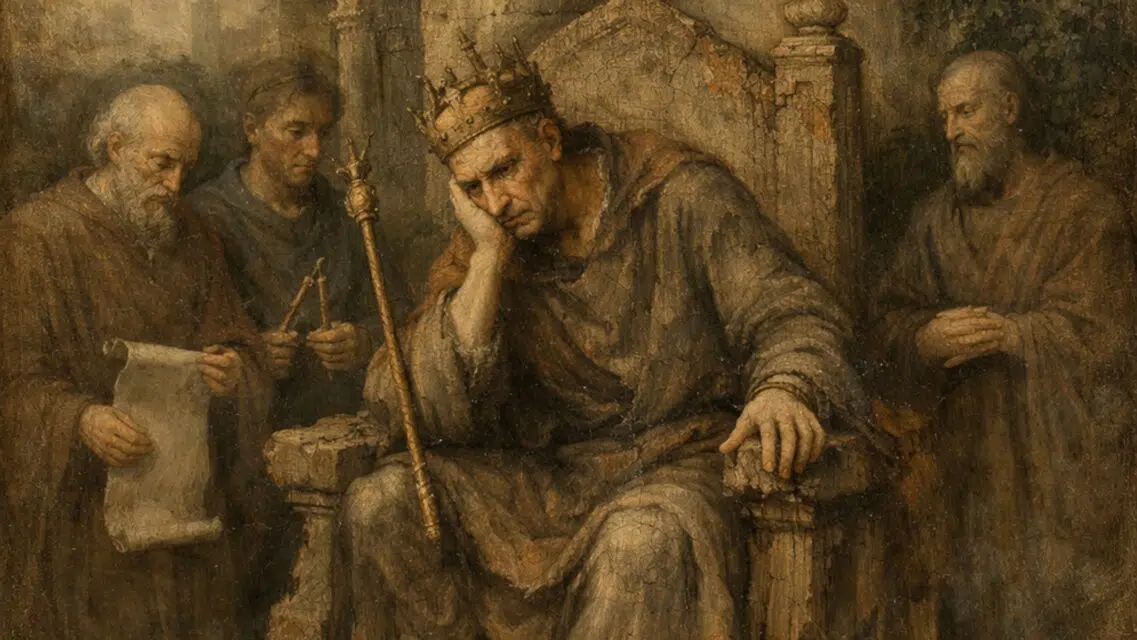
An Empty Throne
And so the Da Vinci Cup sits unclaimed. Not because these figures lack genius - they possess it in excess - but because genius alone has never been enough. The leaders who shaped history were not simply smart; they carried within them a balance of contradictions: ambition tempered by conscience, creativity girded by humility, authority softened by curiosity. They understood people not as variables or market segments but as forces of nature: unpredictable, contradictory, bottomless.
The modern tech landscape, for all its brilliance, has drifted into a strange new mythology. Instead of Renaissance polymaths, we have characters from a children's show - each one specialized, exaggerated, fundamentally incomplete. They are heroes of function, not form.
Wisdom requires slowness in a culture that worships acceleration. It requires doubt in a sector that celebrates conviction. It requires listening in an industry built on disruption. It requires memory in a system that treats history as irrelevant prologue.
Perhaps the Da Vinci Cup remains empty because we are asking the wrong kind of people to lift it. Or perhaps because we are asking a single individual to do something that now requires a collective mind - a network of artists, scientists, activists, historians, designers, ethicists, and dreamers working not in unison but in harmony. Maybe leadership in this century will look less like a man standing on a stage and more like a distributed intelligence operating at human scale.
Not the algorithmic distribution of a platform, but the organic distribution of a conversation. One that includes the engineer in Sofia who understands both neural networks and the fragility of nations. The founder in Lagos who codes while remembering what it means when infrastructure fails. The designer in Seoul who builds interfaces while carrying the memory of dictatorship and democracy both. The developer in Medellín who optimizes systems while understanding that optimization can be violence. The entrepreneur in Nairobi who scales platforms while questioning what deserves to scale.
This kind of synthesis doesn't emerge from homogeneity. It emerges from collision, from the productive friction of different epistemologies forced to communicate. It emerges when the person who's only known success has to collaborate with the person who's survived failure. When the optimizer works with the skeptic. When California's confidence meets the Balkans' doubt, and neither wins but something new crystallizes between them.
Invitation
Still, the cup waits. Its emptiness is not a failure but an invitation. It suggests that leadership is not a byproduct of invention, fame, or wealth. It is a separate discipline, one we have neglected in our haste to accelerate everything else.
The synthesis we need won't come from asking the titans to change. It will come from changing who we recognize as titans. From expanding our definition of leadership to include not just those who scale fastest, but those who understand most deeply. From valuing not just the ability to build, but the wisdom to know what's worth building and what should be left unmade.
The hand that lifts the Da Vinci Cup may not come from where we've been looking. It may come from Sofia or Tallinn, from Lagos or Buenos Aires, from any of the thousand places where people have learned to hold contradiction without breaking. Where they've mastered the art of building the new while honoring the old. Where they understand, in their bones, that the future isn't something we create from nothing - it's something we negotiate with the past.
These aren't people waiting to be discovered or rescued. They're already building, already leading, already demonstrating what integrated intelligence looks like. The question is whether we're capable of seeing them. Whether we can recognize leadership that doesn't announce itself with billion-dollar valuations and TED talks. Whether we can value wisdom that comes bundled with doubt, sophistication that arrives with humility, innovation that refuses to forget what innovation costs.
Until then, the cup waits. And perhaps its waiting is exactly what we need: a reminder that the crown doesn't belong to the fastest or the loudest or the richest. It belongs to whoever can finally synthesize what our titans have kept separate - the machine and the human, the innovation and the wisdom, the acceleration and the memory.
That person exists. They're coding right now, in Sofia and a hundred other cities we've taught ourselves not to see. The question is whether we'll recognize them when they appear. Or whether we'll keep extracting their code while ignoring their wisdom, funding their companies while dismissing their perspective, celebrating their resilience while refusing to learn from what made them resilient.
The cup waits. But it won't wait forever. History has a way of bypassing those who mistake position for destiny. The center that cannot learn from the periphery eventually discovers it was the periphery all along - and the conversation has moved on without them.