


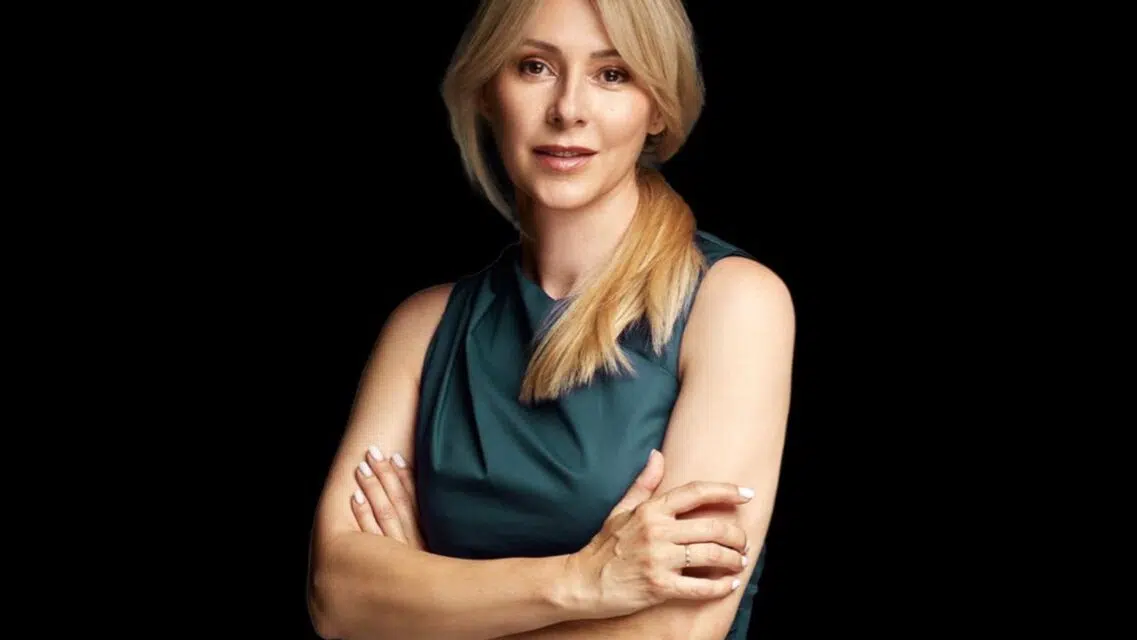
Petya Stoycheva Krivitski: “Seeking help is like reaching out your hand toward yourself.”
A conversation between Kalina Jankova and psychologist and hypnotherapist Petya Stoycheva Krivitski — about silence, boundaries, trauma, and the courage to be whole.
A Human Encounter
For a long time, I’ve had the feeling that the human soul needs a translator — someone who can understand what isn’t spoken, what lives between the words: the tension, the silence, the shame, the tears that won’t fall. Psychology has always been close to me, like music — invisible, yet profoundly present.
When I learned that the mother of a friend of mine was a psychologist — not just someone practicing privately, but a woman with a mission, with a project that fuses therapy and technology called Anima — something in me stirred with curiosity and trust. I visited her page — Petya Stoycheva Krivitski: clinical psychologist, hypnotherapist, founder of Anima Bulgaria. And I thought: this isn’t merely a profession — it’s a path.
The day of our meeting was gray yet luminous. The building was old, with the scent of wood and tea — one of those quiet places that seem to protect silence like a warm blanket. When I rang the bell, Petya opened the door — long blonde hair elegantly gathered back, a soft, almost ethereal presence. She greeted me with a quiet, attentive smile.
“Kalina, welcome,” she said. Her voice had that rare tone that makes something inside you release before you even know why. I stepped inside. The room was warm and inviting, adorned with striking paintings. Within minutes, I realized this wouldn’t be a typical interview. It would be a conversation unfolding beyond planned questions — in the space where truth reveals itself between the lines.
The Beginning — The Path to Psychology
Kalina: Petya, at some point I can’t tell when I’m asking from my list and when we’re simply talking.
Petya: (smiles) And that’s the beauty of it. A real conversation doesn’t follow a script. It happens when we let go of control.
Kalina: Then let’s begin where your journey began. How did you find your way to psychology? Was there a moment, a person, an experience that guided you?
Petya: My daughter. I had her when I was twenty. She was my reason. I didn’t pursue psychology to understand others — I pursued it to understand myself. And to be useful to my child.
There was a period of complete collapse — after my divorce from her father. She was five. It was one of those times when the old truths no longer warm you, and the new ones aren’t born yet. You stand suspended between past and future. That’s when I realized psychology isn’t just the science of the mind — it’s the language the soul begins to speak when silence becomes impossible.
Kalina: It sounds like a spiritual awakening.
Petya: Yes, though I didn’t see it that way then. I simply began searching for meaning. And that search hasn’t ended. Psychology wasn’t a career — it was a journey toward myself.
Folklore Psychology and Ancestral Patterns
Kalina: Earlier we talked about family patterns — the paths we return to unconsciously, even when we already know we don’t want to.
Petya: Yes. These are learned behaviors — unconscious scripts we repeat. Bulgarians carry both the psychology of the sufferer and the victor. We often choose the role of the victim because it’s familiar, even “comfortable” — it invites attention, compassion. But that position doesn’t heal. It traps us in a circle of pain.
Kalina: And is there a way out?
Petya: Yes — through awareness. Stop blaming and start choosing. The fact that you endured something painful doesn’t mean you must suffer forever. Pain can become a lesson. And the lesson — strength.
Kalina: I often feel how difficult it is not to fall back into old patterns, especially with family. With my mother, for example — suddenly I’m fifteen again, reacting the same way.
Petya: I understand completely. This is one of the most common realizations in therapy — noticing that we react from the position of the child we once were. But that’s also the opportunity. When you see the child within you, you can hold it. You can say: “I’m here now. You’re safe.”
Kalina: So — you heal it through attention?
Petya: Exactly. Everything that wasn’t heard will repeat until it is truly listened to.
On the Role of the Psychologist and the Mother
Kalina: Listening to you, psychology feels less like a discipline and more like a way of relating.
Petya: It is. A psychologist is neither a judge nor a rescuer. They are a mirror. They don’t give advice — they reflect. When someone comes to me, I don’t tell them what to do. I create a space where they can hear themselves.
Kalina: That sounds like a great responsibility — as a mother and as a professional.
Petya: Yes. Motherhood is perhaps the deepest form of psychology. When my daughter was young, I realized I couldn’t teach her anything I wasn’t living myself. Children don’t listen to words — they watch the example. So I don’t aim to be the “perfect mother,” but an authentic human being.
Kalina: Many parents struggle with that.
Petya: Because we’re taught to give in order to deserve love. But love isn’t something to prove — it’s something to live. Sometimes in our desire to protect, we deprive the child of confidence. Giving everything can mean taking away. Love isn’t about making life easy — it’s about helping the child build inner support. True care isn’t control — it’s trust.
Trauma as a Path
Kalina: Earlier you said trauma can be necessary. Many people find that frightening.
Petya: We are taught to run from pain. But pain is part of the journey. Traumas are like stones that polish the diamond. Without them, we cannot see our own clarity. My method — Echo-Integration® — is exactly that: helping a person hear the echoes of the past still resonating within them. Not to silence those echoes, but to understand them.
Kalina: So you don’t remove the pain — you translate it.
Petya: Yes. Sometimes a single realization can shift the entire inner architecture. When you accept trauma as part of the puzzle, it loses its power.
Kalina: And what comes next?
Petya: Lightness. Not because the pain disappears, but because you stop resisting it. Transformation begins when you stop fighting yourself. That is real therapy.
Anima
Kalina: You’re part of the Anima Bulgaria team. What distinguishes its philosophy from other therapeutic centers?
Petya: Anima is not merely a therapy space — it’s an invitation to inner awakening. I believe a person is not a sum of symptoms, but a whole living organism — body, heart, mind. At Anima, we don’t aim to “fix” people — we restore connection: between mind and body, between the person and their essence. Our philosophy is simple: change begins when we stop fighting ourselves and start listening with gentleness.

The Human Being and Their Silence
Kalina: In your practice you encounter many stories. What are people struggling with most today?
Petya: Today people don’t arrive with diagnoses — they arrive with the feeling that they’ve lost direction. Anxiety, insomnia, emptiness — these are not mere symptoms, but the soul’s language saying: “I stopped hearing myself.” We live in a world of constant connection, yet often without true connectedness. Therapy becomes one of the few places where you can simply be human — without masks, without roles, without “should.”
Kalina: When someone seeks help but can’t name the problem, how do you help them reach the root of their experience?
Petya: We begin with silence — so they can hear themselves. “Inner voice” may sound abstract, but it’s real. Often, while articulating their request, people pause, think, and discover themselves. The psychologist is a mirror — reflecting, not directing; understanding deeply, and loving.
We create a space where explanations aren’t needed — only sensations. Often the first “words” arise not from the mind, but from the body: tightness in the chest, a lump in the throat, burning eyes. In these invisible signals, the real dialogue begins. I don’t search for problems — I search for where the soul stopped breathing.
The Voice of Love and Boundaries
Kalina: In your blog you write about “clear and respectful communication.” What lies beneath the ability to express ourselves without aggression or guilt?
Petya: To speak clearly means to know yourself — what you feel, what you want, where your boundaries lie. Love is not boundarylessness — quite the opposite. True communication isn’t words but the energy of presence. When you are at peace with yourself, you no longer need aggression to be heard, nor guilt to be accepted.
The Echo-Integration® Method
Kalina: Tell me more about Echo-Integration®. For whom is it most suitable?
Petya: Echo-Integration® is a method I developed from my own experience — personal and professional. It works with the “echoes” of the past still living within us — pains, fears, unconscious scripts. It teaches us not to mute them, but to listen, accept, and reintegrate them into our wholeness. I use it with people who feel “lost” — not ill, but disconnected from themselves. Echo-Integration® brings the person back to their inner center — the true beginning of healing.
Balance and Humanity
Kalina: How do you maintain your own balance when faced daily with such heavy human stories?
Petya: Through silence. Through breath. Through nature. Over time, I learned I cannot carry light for others if I don’t protect it in myself. I have my rituals — writing, music, movement, moments with my daughters. I have a dog 🙂 They bring me back to the present, to simplicity — where life isn’t theory, but feeling.
Kalina: Have people changed after the pandemic — do they seek help more often and speak more openly about mental health?
Petya: Yes. The pandemic was a collective mirror. It showed us how fragile we are — yet how capable of change. Today people speak more openly about anxiety, burnout, loneliness. And that is a huge step — because pain spoken aloud is already half-healed. As the saying goes: shared pain is half pain.
Kalina: How do you see the role of psychotherapy in a society that still carries prejudices about seeing a psychologist?
Petya: Psychotherapy is an act of awareness, not weakness. It is a decision to take responsibility for your inner world. In a society proud of “managing alone,” therapy is radical humility — the declaration that you don’t want merely to survive, but to live.
Kalina: In couples therapy, what are the most common “invisible causes” of tension?
Petya: Not lack of love — but lack of understanding. Most couples don’t stop loving each other — they simply stop hearing each other. They speak through their wounds, not through their hearts. Real intimacy begins when we learn to see not the reaction, but the pain behind it.
Kalina: What is “emotional literacy” in relationships — and can one truly learn it?
Petya: Emotional literacy is the ability to recognize, name, and carry your feelings without guilt. Not to unleash the storm on the other, but also not to imprison it in yourself. Yes, it can be learned — through awareness, therapy, presence. It is a language that isn’t taught but lived.
Kalina: Online therapy has become everyday. What do you see as its advantages and limitations?
Petya: Online therapy brought accessibility — for people in different cities, mothers, travelers, people abroad. I work with clients literally all over the world. Online therapy removed distance, but not the need for human presence. The essential thing isn’t the format — it’s the depth of the connection. When the connection is authentic, real change can happen even through a screen.
Kalina: Do you use digital tools to support clients between sessions — guided meditations, journaling, self-reflection exercises?
Petya: Yes — that’s why I created the Anima app — a “pocket psychologist.” It offers Echo-Integration® techniques for different needs and situations, helping people stay connected with themselves and others. Because therapy does not happen only in the office — it is a way of life. And it’s a mutual process between therapist and client.
Kalina: If you could leave the readers of This is Bulgaria with one piece of personal advice about the courage to seek help — what would it be?
Petya: I would say this: courage isn’t the absence of fear — courage is admitting you need light. Seeking help is like reaching out a hand toward yourself — the most human and sacred act. The moment a person dares to say “I cannot do this alone,” the universe replies: “You are no longer alone.”
Where Words End
As I left Petya’s office, the light in the stairwell felt soft, like the quiet after a long conversation with yourself. There was a tender hush in that space — as if our words still echoed between the walls, but no longer carried weight. They had become what she spoke of — an echo returned home.
Petya is not simply a psychologist — she is one of those rare people who heal through presence, not diagnosis. Listening to her, I felt that every pause between her words was part of the therapy — a pause in which a person can breathe. Her world is both professional and deeply human, shaped around one simple but demanding truth: healing begins when you stop fighting yourself.
When we said goodbye, she smiled — not a smile that says “farewell,” but one that whispers “you will manage.” And I thought how differently life sounds once you begin listening from the inside. Perhaps that is the essence of her philosophy — allowing yourself to be heard, even by your own soul.
Because, as Petya said:
“Seeking help is like reaching out your hand toward yourself.”
And sometimes, that is the bravest gesture of love we can offer ourselves.