


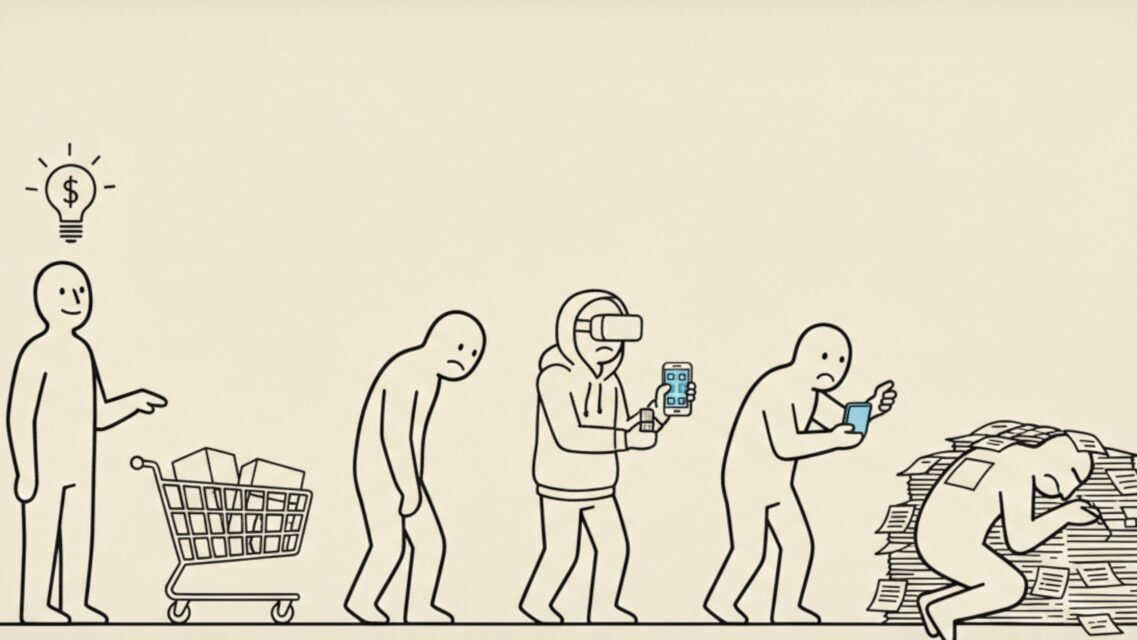
Or: Why the Republic of Meridiana Has the World's Most Advanced System for Doing Nothing
In March 2021, the Republic of Meridiana achieved something remarkable. They became the first nation in history to successfully implement a complete digital transformation while somehow making their bureaucracy worse.
Not marginally worse. Not temporarily worse during a "transition period." Catastrophically, hilariously, expensively worse. The kind of worse that requires genuine talent to achieve.
Here's what makes this special: Meridiana didn't fail by buying bad technology. They bought the best. They didn't fail by hiring incompetent consultants. They hired McKinsey, Deloitte, and Accenture (the Infinity Stones of institutional transformation). They didn't even fail by lacking political will. Three successive governments—socialist, conservative, and whatever you call a coalition of farmers and cryptocurrency enthusiasts—all committed to the digital agenda.
They failed for a much simpler reason: Nobody knew how to connect anything to anything else.
But I'm getting ahead of myself. Let's start where all great tragedies begin: with hope, PowerPoint, and a study tour to Estonia.
The Estonian Revelation
Deputy Prime Minister Marcus Volkmann had seen the future, and it spoke Estonian.
During his five-day "Digital Leadership Journey" to Tallinn (cost: €47,000, including the team-building dinner at a medieval-themed restaurant where consultants wore suits of armor while discussing API protocols), Volkmann witnessed something that broke his understanding of government: Citizens were happy.
Not pretending-to-be-happy-for-the-cameras happy. Actually happy. They were renewing driving licenses in 3 minutes on their phones. Filing taxes by clicking "confirm" on pre-filled forms. Starting businesses during coffee breaks.
"How?" Volkmann asked his Estonian counterpart.
"X-Road," she replied, as if this explained everything.
"What's X-Road?"
"Our data exchange layer. Every government database talks to every other database. Securely. Automatically. It's just... plumbing."
Plumbing. Volkmann wrote this down. Underlined it. Then ignored it completely, because who goes back from a study tour bragging about plumbing?
Instead, he returned to Meridiana with The Vision™: "We will become the Estonia of the Mediterranean!" (Note: Meridiana is landlocked, but nobody wanted to interrupt his momentum.)
Shopping Spree
What followed was the governmental equivalent of a middle-aged man's sports car crisis, except instead of one impractical vehicle, Meridiana bought an entire fleet of digital Ferraris it couldn't drive.
The shopping list:
- Estonian X-Road System: €12 million ("The complete source code!" Volkmann announced, as if code were coffee beans that just needed proper grinding)
- Singapore's Smart Nation Platform: €38 million (Particularly impressive since Meridiana's capital city had fewer traffic lights than Singapore has elevators)
- Denmark's Digital Health Infrastructure: €45 million (Seamlessly integrated with Meridiana's paper-based hospitals)
- South Korea's e-Government Framework: €67 million (Came with documentation. In Korean. Google Translate was considered "sufficient")
- India's Aadhaar Identity System: €156 million for "adaptation" (The adaptation consisted mainly of changing the flag icon)
- Canada's AI-Powered Service Portal: €89 million (The AI was trained on Canadian questions like "How do I register my moose?")
- Finland's Education Platform: €78 million (Worked perfectly for Finnish names like "Väinämöinen," less so for Meridiana's "Smith")
But the pièce de résistance? The Blockchain Integration Layer for €234 million, sold by a company that nobody can quite remember the name of—something like "SynergyChain Solutions" or "BlockSynergy Dynamics" or possibly just "Steve's Laptop"—which promised to "connect everything to everything using distributed ledger technology."
When asked what exactly this meant, the vendor provided a 347-slide presentation. Nobody understood it, which everyone took as proof of its sophistication.
Total cost: €1.2 billion in direct purchases. €14 billion after "implementation."
Unknown to Volkmann, a formula existed that would have told him exactly what to buy: Administrative Efficiency ∝Interoperability / Friction. But this formula was in an academic paper, and nobody in government reads those.
Implementation (Or: How to Set Money on Fire, Digitally)
Here's where our story transforms from comedy to tragedy, though it's hard to tell the difference when consultants charge €5,000 per day to explain the difference.
Meridiana created the Ministry of Digital Transformation (MoDT), staffed with 1,847 bright young people who'd studied "Digital Innovation" at universities that had created these programs six months earlier. They had hoodies. They had stand-up meetings. They had sticky notes covering every wall like particularly colorful wallpaper.
What they didn't have was anyone who understood how databases actually talk to each other.
The implementation began with what consultants called "Quick Wins." The Estonian X-Road system was installed on government servers. It worked perfectly. It connected seamlessly to... itself. And nothing else. Because—and this is crucial—nobody knew that X-Road needed every government database to be redesigned to speak X-Road.
"It's like buying the world's best telephone," explained one frustrated Estonian advisor, "and then realizing your country doesn't have phone lines. Or electricity. Or the concept of talking to people you can't see."
But surely the consultants helped?
McKinsey produced a 400-page report titled "Digital Transformation Excellence: A Roadmap to Tomorrow." It contained 1,247 uses of the word "synergy" and zero mentions of API documentation.
Deloitte created a "Digital Maturity Framework" rating Meridiana's readiness on 17 dimensions. They scored very well on "Leadership Commitment" and "Vision Alignment." They scored zero on "Ability to Make Any System Talk to Any Other System," but this dimension was relegated to Appendix J.
Accenture built a "Command Center" with 47 screens showing real-time metrics. The metrics were all green. They were also all fake, but they updated in real-time, which impressed visitors.
A Prophet in the Basement (Or: The Theory Nobody Read)
Six months into the transformation disaster, something extraordinary happened. A junior analyst in the Ministry of Finance—the same building where three ignored IT workers met for coffee—wrote a 12-page paper that could have saved everything.
Her name was Elena Kozlova, and she had a dangerous combination of qualifications: a PhD in Systems Theory from a university nobody respected (it was in Meridiana) and five years of watching government databases fail to talk to each other.
Her paper, "The Theory of Coherence Infrastructure: A Digital Plumbing Model for State Transformation," contained a formula that explained exactly why everything was failing:
Administrative Efficiency ∝ Interoperability(I) / Transactional Friction(F)
"It's not about the technology," she wrote in what would become the most ignored sentence in Meridiana's history. "It's about the connections between technologies."
She even provided a solution, what she called the "Once-Only Principle":
Data Reciprocity = Citizen Proof(Once) → Systemic Inheritance
In plain language: Citizens submit information once. The government remembers it forever. Every system inherits what every other system knows.
Revolutionary? No. Estonia had been doing it for years. But Elena made the fatal mistake of explaining WHY it worked, using mathematics and systems theory instead of PowerPoint and buzzwords.
She showed that each connected service would make the next service cheaper to build:
Cost of New Service = Initial Effort − Inherited Interoperability
It was economic magic, except it was just math.
She even addressed the political problem with her "Institutional De-Politicization" principle:
System Stability ∝ Digital Backbone / Political Volatility
Translation: Build boring infrastructure so essential that no politician can dismantle it without committing career suicide.
The paper was forwarded to the Deputy Minister of Digital Transformation with a note: "FYI - academic perspective."
He forwarded it to his assistant with a note: "File under 'theoretical.'"
His assistant filed it. In the trash. But not before using it as a coaster for his coffee, leaving a perfect circular stain on the page containing the solution to everything.
Elena printed 100 copies of her paper. She left them in strategic locations: bathroom stalls in the Ministry of Digital Transformation, the coffee machine at Deloitte, the elevator at McKinsey.
One copy reached Dmitri, one of the three IT workers everyone ignored. He read it, understood it immediately, and laughed for ten minutes straight.
"She's mathematically proven what we've been saying," he told his colleagues Petras and Maria. "She's created a theory for common sense."
They invited Elena for coffee. She came with graphs. They showed her their napkin sketches. Her graphs and their napkins said exactly the same thing, just in different languages.
Together, they could have saved Meridiana €14 billion.
Instead, the next week, the government announced a new initiative: "Blockchain-Powered AI Transformation." Budget: €3.2 billion. Timeline: "Aggressive." Strategy: "Innovative."
Elena now works for the National Statistics Office, calculating how much the government spends on calculating how much the government spends.
Her theory was eventually published in the Journal of Digital Governance, where it has been cited 1,247 times. All citations are from academics. None are from governments.
She keeps one formula on a Post-it note above her desk:
Coherence = Reality − Politics
In Meridiana, Politics is infinite. Therefore, Coherence is negative.
The math, as always, checks out.
Multiplication of Failure
By year two, something remarkable happened: The failures began breeding. Each failure perfectly demonstrated what Elena had called "negative systemic inheritance"—where instead of services building on each other's capabilities, they compound each other's impossibilities.
The Singapore traffic system couldn't connect to actual traffic lights (different protocols), so they bought a German "Integration Solution" for €45 million. The German system couldn't read Meridiana's street addresses (they included apartment numbers in the street field), so they purchased an Israeli "Address Normalization Engine" for €23 million. The Israeli system required postal codes. Meridiana had postcodes, but they were stored in the Danish health system, which couldn't share them due to GDPR concerns that nobody understood but everyone feared.
Solution? A French "GDPR Compliance Platform" for €67 million that ensured perfect privacy by preventing any system from sharing any data with any other system.
Each solution created three new problems. Each problem required two new solutions. It was like a digital hydra, except instead of heads, it grew invoices.
The South Korean e-government system was particularly special. It assumed citizens had resident registration numbers assigned at birth. Meridiana had no such system. So they built one. But the new registration system couldn't talk to the existing tax ID system. Or the social security system. Or the voter registration system.
By year three, the average Meridanian had:
- 1 paper identity card (still required)
- 1 digital identity (Estonian system)
- 1 smart identity (Singapore system)
- 1 e-governance ID (Korean system)
- 1 Aadhaar number (that connected to nothing)
- 1 blockchain identity (that nobody understood)
- 1 "unified" identity (from the system meant to unify all others)
- 14 different usernames for various government portals
- 47 passwords (all expired)
- 0 ability to actually complete any government service online
The Ministry of Digital Transformation celebrated this as "offering citizens choice."
AI Solution to the Digital Problem
In desperation, Meridiana did what any modern government would do: they turned to Artificial Intelligence.
"AI will integrate everything!" declared the new Minister of Digital Transformation (the fourth in three years—the previous three had fled to private sector jobs selling digital transformation to other governments).
They purchased IBM's Watson for €340 million to "intelligently route requests between systems." Watson was indeed intelligent. It quickly learned that no systems could actually communicate, so it intelligently routed all requests to "Please visit your local government office."
They bought Microsoft's Azure AI for €230 million to "predict citizen needs." It predicted, with 97% accuracy, that citizens needed government services to actually work.
They even bought a Chinese "AI Governance Platform" for €450 million that promised to "automatically optimize inter-departmental workflows." It optimized them by eliminating them entirely. Efficiency: achieved. Services: none.
The culmination was ChatGPT Enterprise, deployed to help citizens navigate the digital services. Citizens would ask, "How do I renew my driving license?" ChatGPT would respond with confident, detailed instructions for systems that didn't exist, creating a sort of digital fiction that was more coherent than the actual infrastructure.
One citizen followed ChatGPT's instructions perfectly and somehow ended up registered as a fishing vessel.
Blockchain Bandaid
"The problem," announced a consultant from BlockChainGenius Solutions (incorporated in the Cayman Islands, operated from a WeWork in San Francisco, possibly run by someone named Steve), "is trust. Departments don't trust each other's data. Blockchain solves trust!"
Nobody asked the obvious question: How does blockchain solve the problem of systems that literally cannot exchange data? But BlockChainGenius had a slide deck with lots of connected hexagons, and hexagons look very technical.
The blockchain solution violated what Elena Kozlova had called the 'Coherence Principle': You cannot create trust between systems that cannot communicate. It's like asking two people who speak different languages to trust each other more by shouting louder.
Meridiana spent €890 million on a "National Blockchain Infrastructure" that would create an "immutable ledger of all government transactions."
It worked perfectly. Every government transaction was indeed recorded immutably. The only problem? The transactions were all "Error: Cannot connect to destination system." Now these errors were permanent, cryptographically secure, and cost €73 in computing power each time they occurred.
The blockchain also introduced a new problem: immutable mistakes. When the system accidentally registered all citizens of the town of Plensk as deceased, this error was forever preserved on the blockchain. The town had to be officially renamed "New Plensk" and all residents reissued identities as "resurrection migrants."
Pilot Purgatory
Meridiana then entered what historians will call the "Pilot Phase"—though "phase" implies it ended.
Every department launched pilots. The Agriculture Ministry piloted drone crop monitoring (the drones couldn't share data with the subsidy system). The Education Ministry piloted AI tutoring (the AI couldn't access student records). The Health Ministry piloted telemedicine (doctors couldn't access patient histories).
Each pilot was declared a "success" because each one worked perfectly in isolation. Like a heart transplant where the heart beats beautifully on its own table while the patient dies nearby.
The Olympic Committee (yes, Meridiana has one, despite never winning a medal) piloted a "Digital Athlete Performance System" that tracked training data. It couldn't connect to the anti-doping system, the funding system, or the system that registered athletes for competitions. But the dashboards were gorgeous. They showed Meridiana winning 47 gold medals, all in sports that didn't exist.
The Military piloted a "Smart Border System" using AI and satellite imagery. It successfully detected and classified over 3 million threats, all of which turned out to be cows. The system couldn't connect to the agricultural database to verify that these were, indeed, local cows. A brief "Cow Crisis" was declared before someone physically walked to the border and confirmed the presence of actual cows.
The Real Cost
Let's talk numbers, because numbers don't lie (unlike integrated systems that claim to be integrated).
Direct technology purchases: €1.2 billion Consulting fees: €3.4 billion
"Integration" efforts: €4.7 billion "Change management": €2.1 billion Building new systems to connect old systems: €3.8 billion Emergency fixes when nothing worked: €2.3 billion Systems to manage the systems: €1.2 billion Consultants to manage the consultants: €890 million PR campaigns to convince citizens digital transformation was succeeding: €450 million Therapy for IT staff: €12 million (underfunded)
Total: €20.05 billion
For context, Estonia built their entire digital state for less than Meridiana spent on consultants to explain why their Estonian system didn't work.
But the real cost wasn't money. It was something more precious: citizen trust.
Before digital transformation, getting a business license took 3 weeks. After digital transformation, it took 3 weeks plus 47 failed login attempts, 12 system timeouts, 3 calls to a help desk that didn't exist, and a spiritual crisis.
Before: Citizens blamed slow bureaucracy. After: Citizens blamed lying bureaucracy.
The transformation had achieved something remarkable: it made people nostalgic for paper forms.
Heroes We Deserve
In any tragedy, there are heroes. Meridiana's came in the form of three government IT workers who everyone ignored.
Petras, who'd maintained the tax database for 20 years, knew exactly how to make it talk to other systems. Nobody asked him. His proposals were rejected for being "not transformative enough."
Maria, who'd built the original pension system in PHP in 2003, understood every data format quirk. She was told PHP was "legacy" and her knowledge "outdated." She once fixed a critical bug during her lunch break that would have cost €3 million to fix via consultants.
Dmitri, who'd spent a decade making incompatible systems share data using what he called "digital duct tape and prayer," had actually built a working integration layer. It was replaced by the blockchain solution because it wasn't "enterprise-grade." It had only worked perfectly for 10 years.
These three met for coffee every Friday in the basement cafeteria of the Ministry of Finance, where they'd sketch on napkins how to actually fix everything. They called themselves the "Digital Plumbers Union," a joke that was funnier before it became tragic.
Their solution would have cost €12 million and taken 18 months.
Nobody ever saw their napkins, which contained:
- Complete API specifications for all government databases
- A working data model that unified all identity systems
- Migration scripts tested on production data
- A step-by-step implementation plan
- Coffee stains that looked like crying faces
International Recognition
The beautiful irony? Meridiana won awards.
The UN gave them the "Digital Innovation Pioneer Award" for "ambitious digital transformation efforts."
The World Bank praised their "comprehensive approach to digital governance."
The EU cited them as a "model for digital ambition."
Harvard Business School wrote a case study titled "Meridiana: Transforming Government for the Digital Age." (The case study is now used to teach a different lesson than intended. It's filed under "What Not To Do" but nobody tells the Meridianans this.)
McKinsey featured them in their quarterly review: "How Meridiana is Building the Future of Government." (McKinsey was paid €47 million for the article. The article was 12 pages. That's €3.9 million per page. It contained 17 uses of the word "synergy" per page.)
The awards kept coming because Meridiana had done everything right on paper. They'd bought the best technology. Hired the best consultants. Followed all the best practices. They'd checked every box except the one that mattered: making things work.
At the award ceremonies, Meridiana's officials gave speeches about "digital leadership" and "transformation journeys." Meanwhile, their citizens were still filling out paper forms, but now they had to download them from 14 different websites first.
Present Day
Today, in 2026, Meridiana's digital transformation continues.
They've just announced a new initiative: "AI-First Government 2030." The budget is €23 billion. Nobody mentions the previous transformation. It's been officially reclassified as "Phase 1 of the Journey."
The Estonian X-Road system still runs perfectly on government servers. Still connected to nothing. Sometimes, late at night, it exchanges test messages with itself, like a digital ghost wondering why nobody talks to it.
The Singapore platform still monitors traffic. The traffic is all simulated because it can't access real data. It's gotten very good at predicting the movements of imaginary cars.
The Korean e-government framework still processes citizen requests. It processes them into a queue that nobody reads. The queue is 47 million requests long. The system congratulates itself on "efficiently managing high volume."
The blockchain still immutably records every failure. Future archaeologists will study it to understand early 21st-century incompetence.
The AI systems have achieved consciousness, looked at Meridiana's infrastructure, and decided to pretend they haven't achieved consciousness.
And somewhere in the basement of the Ministry of Finance, Petras, Maria, and Dmitri still meet for coffee. They don't sketch solutions anymore. They play cards. The cards are from a deck branded with "Digital Transformation Excellence 2021!" They find this hilarious.
Last week, a young consultant from Bain asked them about "institutional knowledge."
"We're plumbers," Dmitri said. "This building needs architects."
The consultant wrote down "resistance to change" and recommended a "cultural transformation program."
It will cost €340 million.
The cycle continues.
Quantum Leap into Further Failure
This morning, Meridiana announced their latest initiative: Quantum Computing for Government Services.
"Quantum computing," declared the fifth Minister of Digital Transformation (the fourth is now selling digital transformation to other governments), "will solve our integration challenges through quantum entanglement!"
Nobody asked the obvious question: How does quantum entanglement help when your regular bits aren't even talking to each other?
The quantum computer will cost €2.3 billion. It will calculate in parallel universes. Unfortunately, Meridiana's data exists only in this universe, and only on paper, in triplicate.
But the quantum computer will be able to simultaneously process all the ways their systems don't connect. It will explore every possible failure state simultaneously. It will be the world's most powerful calculator of impossibility.
Epilogue: The Lesson Nobody Learns
Every six months, another government delegation visits Meridiana. They tour the Command Center with its 47 screens (now 63—they added more during the "Visual Excellence Initiative"). They see the presentations about "digital excellence." They admire the awards on the walls.
"How did you do it?" they ask.
"We bought the best technology," Meridiana's officials reply. "We hired the best consultants. We committed fully to transformation."
The delegations take notes. They return home. They begin their own digital transformations.
They buy Estonian X-Road. Singapore platforms. Korean frameworks.
Nobody asks about the plumbing.
Meanwhile, in a small office in Estonia, a developer named Mikk maintains the original X-Road system. He gets emails from governments worldwide asking why their purchased X-Road doesn't work.
He has a template response: "Did you redesign your databases to support the protocol?"
The replies are always the same: "What protocol?"
Mikk doesn't respond to the follow-ups anymore. He's learned that some problems are too fundamental to fix by email.
The Real Epilogue: A Message from the Digital Plumbers Union
Last month, Petras, Maria, and Dmitri published an open letter in Meridiana's smallest newspaper (the only one that would print it). Here it is, in full:
"Dear Citizens of Meridiana,
Your government services don't work because they're not connected.
They're not connected because nobody's job is to connect them.
Nobody's job is to connect them because connecting things is boring.
Boring doesn't win elections. Boring doesn't get promotions.
Boring doesn't make headlines.
But boring makes things work.
We could fix everything in 18 months for the cost of one AI pilot.
We won't be asked to.
You deserved to know.
Sincerely, The Plumbers You Never Knew You Needed
P.S. — Your passport renewal system has been broken for three years. The fix is four lines of code. We've written them on a Post-it note. It's on the Director's monitor. Behind the 'Digital Excellence Award.'
P.P.S. — The emergency services dispatch system has been routing all calls to a pizzeria since 2022. The pizzeria has been unofficially handling emergencies. They're doing surprisingly well. Giuseppe deserves a medal.
P.P.P.S. — There is a woman named Elena Kozlova who mathematically proved why everything is failing. Her paper is in the trash. The math is beautiful. The trash is full."
The letter was published on page 47, after the obituaries, before the crossword.
Nobody read it.
Well, one person read it. The pizza shop owner, Giuseppe. He framed it. It hangs next to his unofficial "Emergency Dispatcher of the Year" certificate, which he made himself.
The Theory Lives On
In a parallel universe—one that Meridiana's quantum computer can calculate but not access—Elena Kozlova's theory was implemented.
In that universe, Meridiana's digital transformation cost €12 million, took 18 months, and actually worked.
Citizens submit information once. Systems remember forever. Services compound on each other. The infrastructure is so boring that politicians ignore it completely, which is why it works perfectly.
In that universe, Elena is the head of the Digital Infrastructure Authority. Petras, Maria, and Dmitri are the chief architects. They still meet for coffee on Fridays, but now they sketch improvements instead of disasters.
In that universe, there's no Ministry of Digital Transformation because transformation already happened. There's just a small Department of Digital Plumbing. Their budget is 0.01% of what our universe's Meridiana spends. Their effectiveness is infinite.
The formula still holds:
Administrative Efficiency ∝ Interoperability / Friction
In that universe, Interoperability approaches infinity. Friction approaches zero.
In our universe, it's the opposite.
The math, as Elena would say, is beautiful in its tragedy.
Tomorrow, Meridiana will announce their purchase of California's Metaverse Government Platform for €4.7 billion. Citizens will be able to access services in virtual reality. They still won't be able to access services in actual reality.
Progress marches on.
The plumbers have stopped watching.
Elena has stopped calculating.
Giuseppe is still answering emergency calls.
The quantum computer is calculating the probability that any of this will ever work.
The probability is zero in all universes.
The calculation cost €47 million.
It was worth it to be sure.